
How to Use an AI SEO Writing Tool: A Complete Guide With RankPanda
Learn how an AI SEO content writer works and why RankPanda stands out with automated research, briefs, and articles. Try SEO content automation software for free.
Search engines reward content that is relevant, strategic, and aligned with user intent. But creating that kind of content consistently can be time-consuming.
That’s where an AI SEO writing tool comes in.
Modern tools like RankPanda combine AI writing, SEO research, and strategy automation to help marketers, founders, businesses, and agencies publish content faster—without sacrificing quality.
In this guide, you’ll learn how to use an AI SEO writing tool step-by-step, based on the workflow inside RankPanda. By the end, you’ll understand how AI can help you create search-optimized articles that actually convert readers into customers.
Why Use an AI SEO Writing Tool?
Before diving into the process, it's important to understand why tools like RankPanda are becoming essential.
A good AI SEO content writer doesn’t just generate text. It helps with:
- Keyword strategy
- Audience targeting
- Content structure
- Research and citations
- SEO optimization
- Publishing-ready formatting
For marketers and agencies, this means less manual work and faster content production without losing strategic quality.
That’s why many teams now rely on SEO content automation software to scale their content marketing efforts. With that said, let me walk you through on how to use RankPanda AI so you can start scaling your content.
Step 1: Enter Your Brand Details
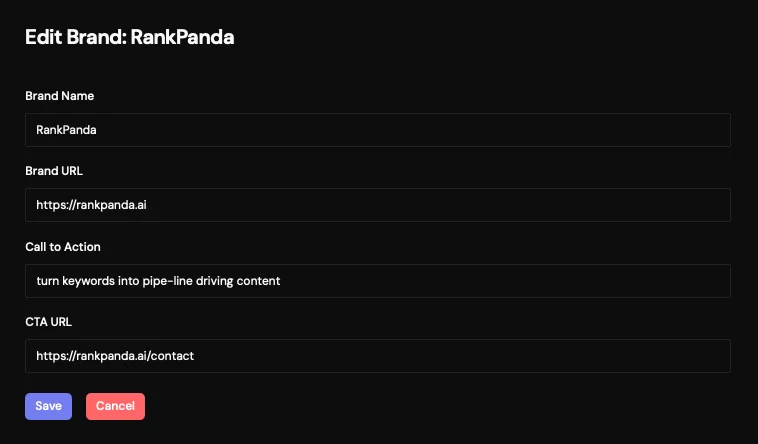
The first step in RankPanda is providing your brand information.
This includes:
- Brand name
- Brand URL
- Call-to-action (CTA)
- CTA URL (link you are trying to promote)
These inputs allow the AI SEO writing tool to understand your brand context.
Instead of producing generic AI content, the system aligns every article with your:
- Product or service
- Brand messaging
- Business goals
This ensures your content doesn’t just rank — it also supports conversions.
Step 2: Analyze Your Brand Voice and Expertise
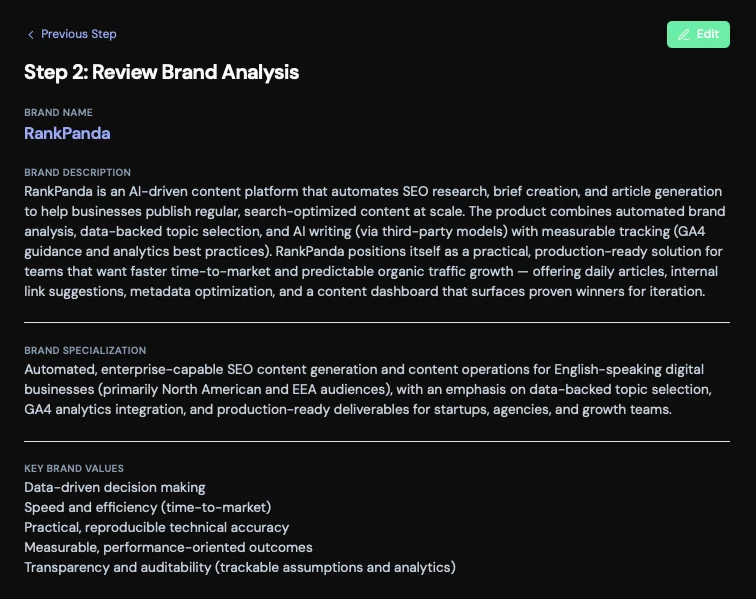
Once your brand details are added, RankPanda analyzes your website to understand your:
- Voice and tone
- Industry specialization
- Messaging style
- Expertise signals
This process helps the tool avoid the biggest problem with many AI writers: generic content.
With this analysis, the AI blog writer produces content that:
- Sounds consistent with your brand
- Positions you as an authority
- Feels credible to readers
The result is content that reflects your expertise instead of sounding robotic.
Step 3: Define Your Target Audience and Region
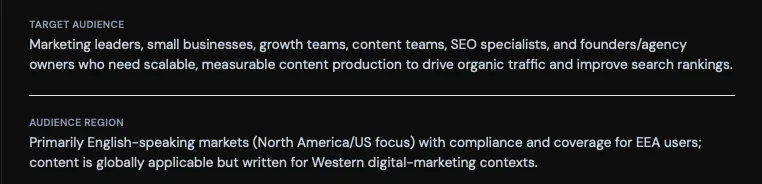
Not all content should target everyone.
High-performing SEO content is designed for specific audiences in specific regions.
RankPanda allows you to define:
- Target audience
- Geographic region
- Market focus
This helps the AI SEO content writer tailor the messaging to match the expectations and context of the readers.
For example, the tone, examples, and language may differ depending on whether you're targeting:
- SaaS founders
- Marketing agencies
- Local business owners
Localized messaging often improves engagement and search performance.
Step 4: Choose Your Keyword Strategy
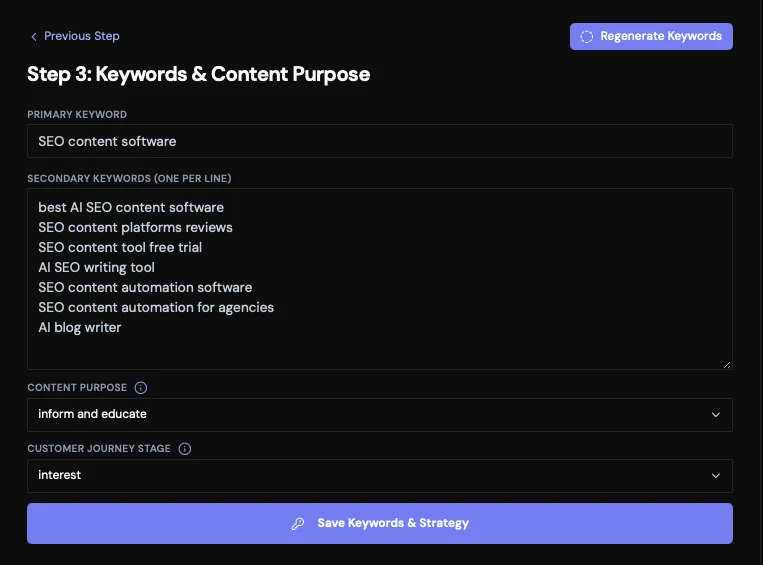
A successful article starts with the right keyword strategy.
Inside RankPanda, you select:
- A primary keyword
- Supporting secondary keywords
- Content purpose
- Customer journey stage (sales funnel stage)
For example, the primary keyword for this guide is SEO content software.
Supporting keywords might include:
- best AI SEO content software
- AI SEO content writer
- SEO content automation software
- AI blog writer
- etc.
You can also manually input a set of keywords that you have for maximum control.
This structure ensures the article is optimized for search engines while still being valuable to readers.
Step 5: Set Your Communication Objective
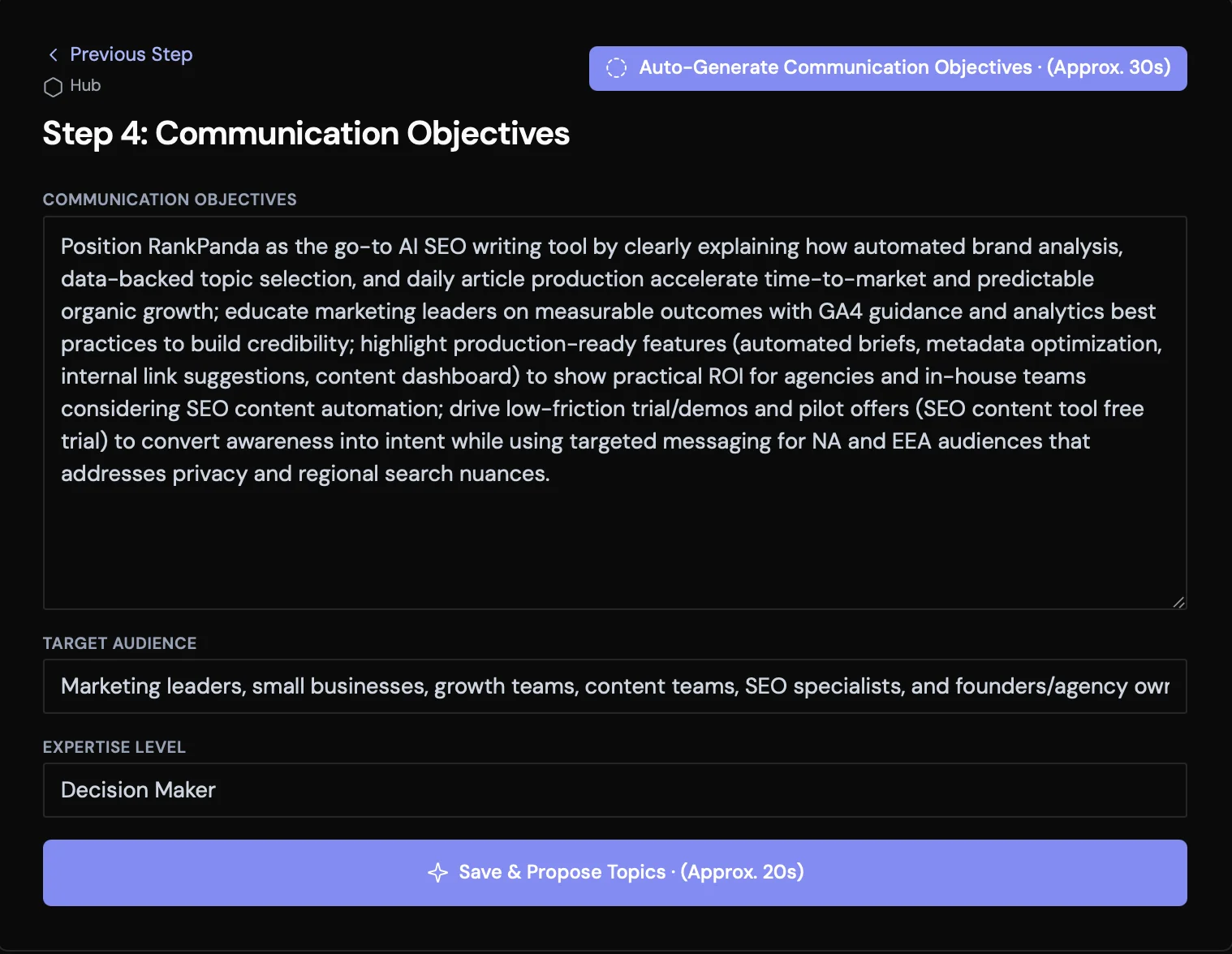
Not every piece of content has the same goal.
Some content aims to:
- Educate
- Inspire
- Entertain
- Sell
RankPanda lets you define your communication objective before writing begins.
This ensures the AI organizes the article in a way that moves readers through the intended experience.
For example:
- Educational articles build authority
- Inspirational content increases engagement
- Sales-focused articles drive conversions
This strategic layer and nuance makes RankPanda one of the best AI SEO content software options available today.
Step 6: Generate Topic Ideas Automatically
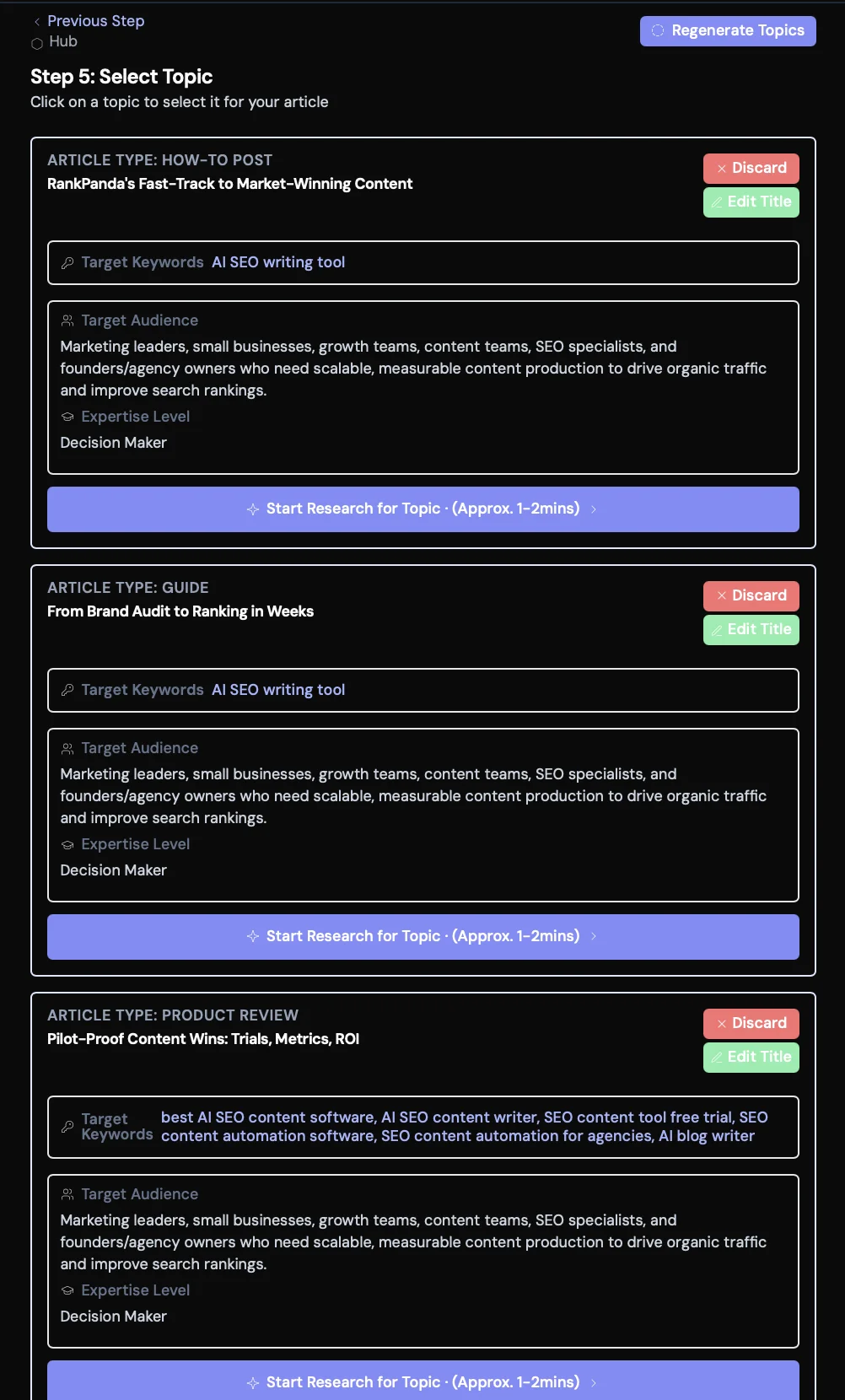
One of the hardest parts of content marketing is deciding what to write about.
Instead of brainstorming endlessly, RankPanda generates topic ideas based on your inputs.
The AI considers:
- Keywords
- Audience intent
- Industry context
- Search behavior
This helps you discover angles that readers are more likely to:
- Click
- Read
- Share
For agencies handling multiple clients, this feature alone can save hours every week and supports SEO content automation for agencies.
For businesses, it simplifies content planning and helps teams consistently publish SEO-optimized articles without needing a large content team.
Step 7: Automated Research and Data Gathering
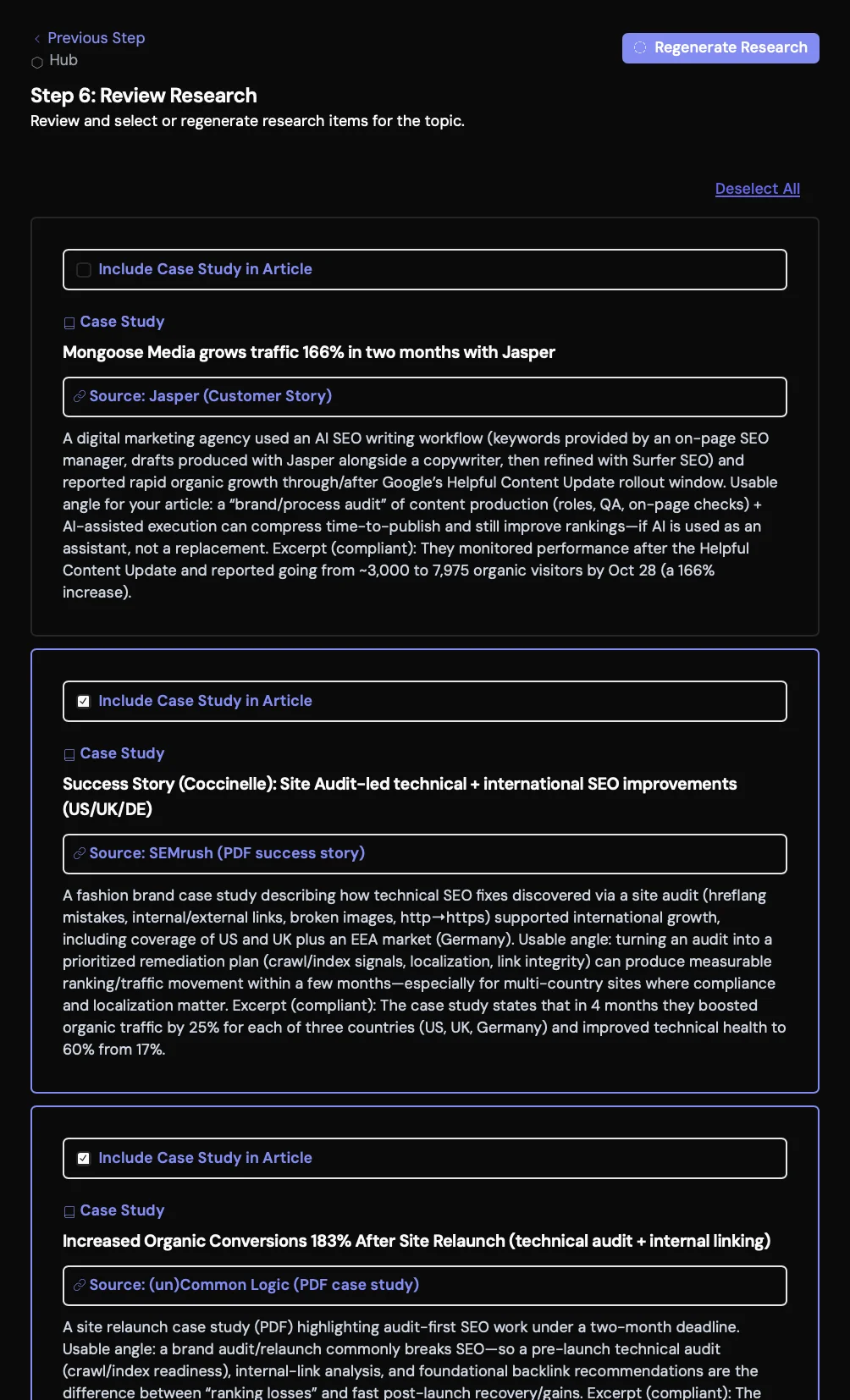
Strong SEO content often includes:
- Statistics
- Case studies
- Expert insights
- Internal linking opportunities
RankPanda automatically gathers relevant research from across the web, including your own website content.
The system collects information such as:
- Industry data
- Supporting evidence
- Expert quotes
- Relevant content from your own website
If any research item isn’t relevant for your judgment, or if it's mentioning your competitor, you can remove it before generating the article by unticking the box.
This feature makes RankPanda a powerful SEO content automation software, because it reduces the time spent on manual research.
Step 8: Generate Your SEO Article

Once your strategy and research are ready, it’s time to generate the article.
You simply:
- Choose your word count
- Click generate
- Let the AI create the structured draft
The AI SEO writing tool then transforms your inputs into a complete SEO article that includes:
- Logical structure
- Optimized headings
- Keyword integration
- Research-based insights
This dramatically speeds up the content production process.
Instead of spending hours writing from scratch, you start with a structured draft ready for editing and publishing.
Step 9: Generate SEO Meta Tags
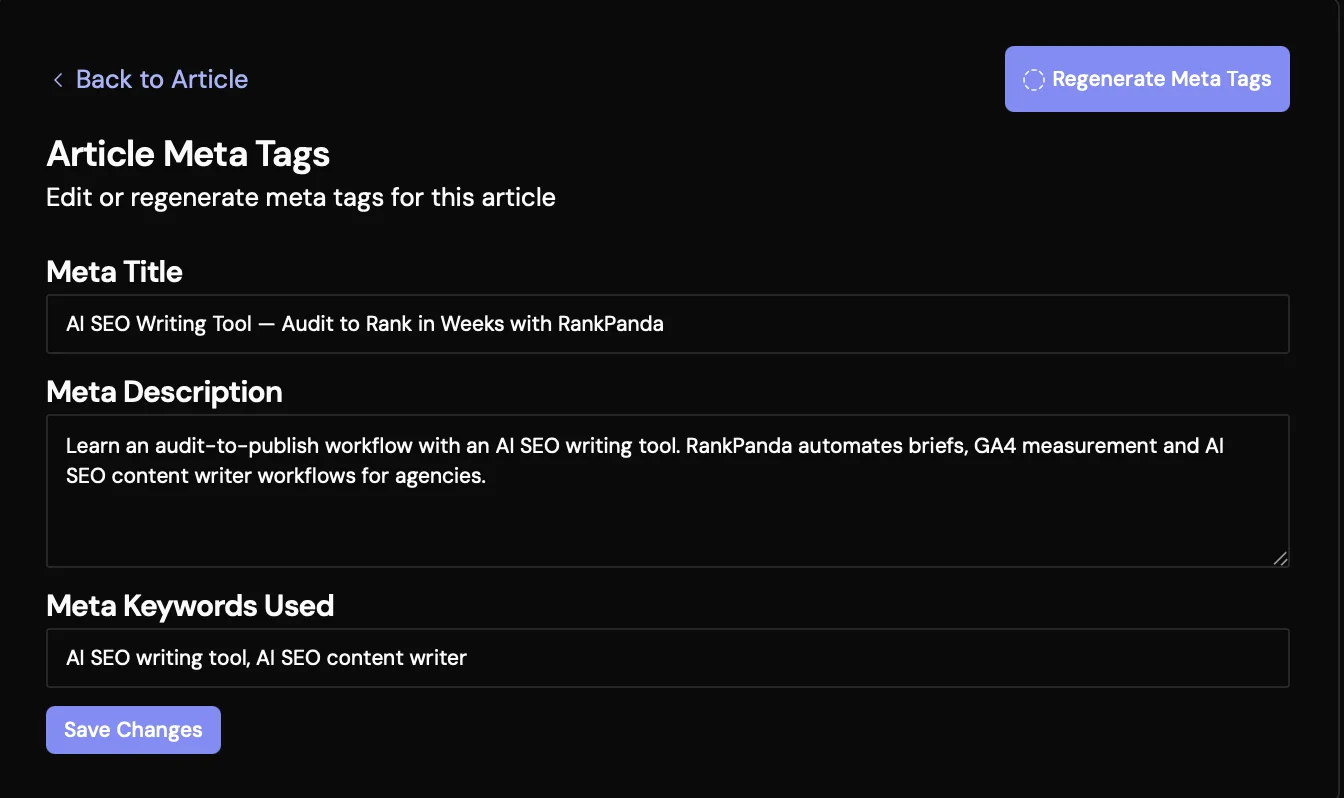
Search engine optimization doesn’t stop with the article.
RankPanda also generates:
- Meta title
- Meta description
These are created using your:
- Primary keyword
- Secondary keywords
- Article content
If the first result isn’t ideal, you can regenerate meta tags until you find the best version.
This helps ensure your content is optimized for search engine click-through rates.
Step 10: Export Your Content in CMS-Ready Formats

After the article is generated, you can copy or export it in multiple formats.
RankPanda supports:
- HTML
- Markdown
- Rich text
This makes it easy to move your content directly into your CMS or publishing platform.
By automating formatting and structure, RankPanda removes much of the busywork associated with content publishing.
Start Creating SEO Content at Scale
AI is rapidly transforming how content is created and optimized.
With tools like RankPanda, businesses, marketers and agencies can combine strategy, research, writing, and optimization into one streamlined workflow.
Instead of juggling multiple tools, you can rely on a single AI SEO writing tool to handle the heavy lifting.
If you want to experience it yourself, you can start with a free trial and see how automation can speed up your content creation process.
👉 Visit https://rankpanda.ai and start producing high-quality SEO content at scale.
An article like this takes RankPanda minutes, not hours.
Run your site through the free analyzer and see what it finds. No signup.
Analyze your site